Reading Time: 6 min
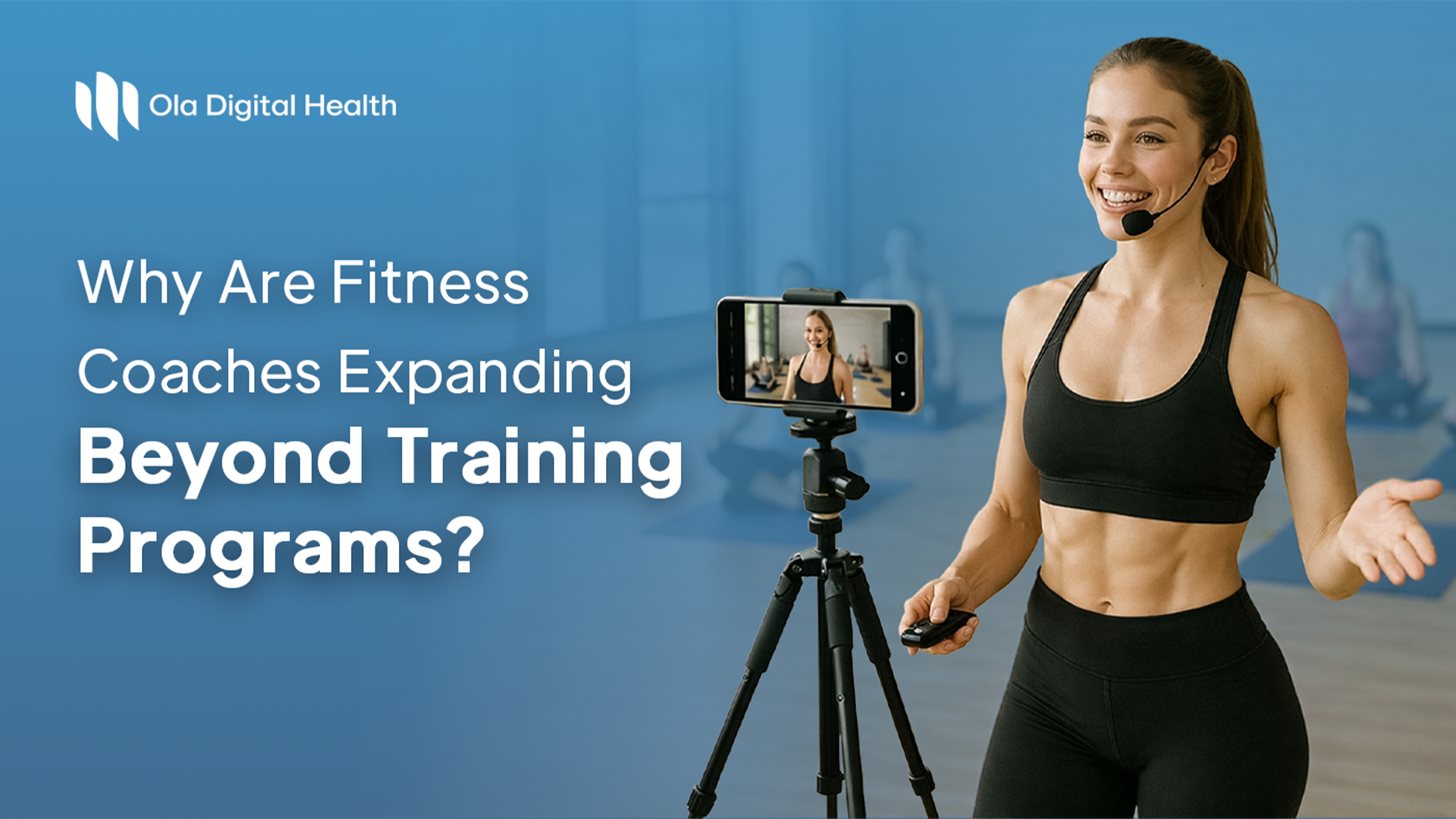
A few years ago, being a fitness coach meant writing workout plans, checking form, and keeping clients accountable.
That was enough.
Today?
Not always.
Here’s something a lot of coaches have noticed.
A client might follow every workout perfectly and still struggle with sleep.
Another eats well but feels exhausted all the time.
Someone else keeps losing motivation because stress is getting in the way.
Eventually, the conversation moves beyond squats, macros, and step counts.
Clients start asking bigger questions.
“How can I improve my energy?”
“Should I get my health checked?”
“Can you recommend someone who can help?”
That’s when many coaches realize something.
People aren’t just looking for workouts anymore.
They’re looking for someone who can guide their overall wellness journey.
For fitness entrepreneurs, that’s changing the business landscape in a big way.
Fitness coaching isn’t just about fitness anymore
According to the American College of Sports Medicine’s 2025 Worldwide Fitness Trends survey, Mobile Exercise Apps ranked #2, Data-Driven Training Technology ranked #7, and Health & Wellness Coaching entered the Top 10 fitness trends for 2025.
The survey included insights from nearly 2,000 clinicians, researchers, and fitness professionals worldwide, highlighting a clear shift toward ongoing coaching, digital engagement, and whole-person wellness.
Talk to almost any experienced coach, and you’ll hear a similar story.
Clients rarely stay focused on exercise alone.
One week they’re asking about recovery.
The next week it’s nutrition.
Then sleep.
Stress.
Blood work.
Healthy aging.
The goals become much broader than simply losing weight or gaining muscle.
That’s one reason many coaches are exploring wellness programs for fitness coaches instead of offering training alone.
Not because workouts matter less.
Because clients are asking for more support than a workout plan can provide.
People want one trusted guide
Think about it.
If someone already trusts their coach, who are they likely to ask first?
Probably not Google.
Probably not social media.
They’re going to ask the person they’ve been working with every week.
That doesn’t mean coaches should try to do everything themselves.
Far from it.
It means they’re often in a position to connect clients with the right professionals while continuing to support healthy habits.
That’s a very different role than simply counting reps.
The business model is changing too
Years ago, many coaches relied almost entirely on one-on-one sessions.
If they weren’t training, they weren’t earning.
Today, more coaches are building businesses instead of schedules.
They’re creating memberships.
Online communities.
Educational content.
Habit coaching.
Virtual check-ins.
Recovery support.
Lifestyle programs.
Here’s how that shift often looks:
| Traditional Coaching Model | Modern Wellness Business |
| Workout sessions only | Ongoing wellness support |
| Income tied to hours | Multiple service offerings |
| One-time goals | Long-term client relationships |
| Limited touchpoints | Regular digital engagement |
| Fitness-first approach | Whole-person wellness mindset |
The goal isn’t necessarily to do more.
It’s to create more value over time.
Clients don’t disappear after reaching one goal anymore
This is something a lot of coaches have experienced.
A client reaches their target weight.
Finishes a program.
Feels great.
Then…
They leave.
Not because they weren’t happy.
Because the journey ended.
When businesses expand into broader wellness support, the relationship often changes.
The conversation becomes less about one milestone and more about maintaining healthy habits over time.
That’s good for clients.
It’s also good for business continuity.
Growth creates new questions
Expanding sounds exciting.
And it is.
But it also raises practical questions.
How do appointments get scheduled?
How do clients stay engaged between sessions?
How do different professionals communicate when needed?
How do you create a consistent experience as the business grows?
This is where technology starts becoming part of the conversation.
Many businesses exploring telehealth turnkey solutions aren’t looking for technology just because it’s new.
They’re looking for systems that reduce manual work and create a smoother experience for both teams and clients.
Building everything yourself isn’t always the smartest move
A lot of founders assume they need to create every piece from scratch.
Website.
Portal.
Scheduling.
Communication.
Integrations.
Client management.
That sounds exciting until the timelines and budgets start growing.
That’s one reason interest in a white label telehealth platform continues to grow among wellness businesses.
Instead of spending months building software, businesses can often focus on what they actually do best.
Supporting people.
Growing relationships.
Creating better experiences.
Expansion should feel intentional, not rushed
Here’s something worth thinking about.
Adding another service doesn’t automatically create a better business.
Adding the right service at the right time might.
Before trying to expand your fitness coaching business, it helps to ask a few questions.
Are clients already asking for more support?
Can the experience stay consistent as you grow?
Do you have the right partners and systems in place?
Sometimes the answer isn’t launching something new tomorrow.
It’s building a stronger foundation today.
Where things seem to be heading
Fitness coaches aren’t leaving fitness behind.
If anything, they’re becoming an even more important part of people’s health journeys.
The difference is that clients now see wellness as something bigger than workouts.
They want guidance.
Consistency.
Education.
And support that fits into everyday life.
That’s why more entrepreneurs are exploring business ideas for fitness coaches that go beyond traditional training and looking at ways to launch a wellness program for fitness clients that complements, rather than replaces, their existing services.
The businesses that grow over the next few years probably won’t be the ones offering the most services.
They’ll be the ones creating the most connected experience.
If you’re thinking about what’s next for your coaching business, it helps to build with the future in mind.
Schedule a call with our experts at Ola Digital Health to explore how scalable digital infrastructure and connected care solutions can support the next stage of your wellness business.
Frequently Asked Questions
Because clients are asking bigger questions than workouts alone can answer. They’re looking for support with sleep, stress, recovery, nutrition, and long-term healthy habits.
A lot of coaches are building memberships, educational programs, online communities, and wellness services that let them support more people without relying only on hourly sessions.
Start by listening to your clients. If they’re already asking for broader support, think about the systems, partnerships, and workflows you’ll need before adding new services.
Mostly because they help organize communication, scheduling, and ongoing engagement. That makes it easier to deliver a consistent experience as the business grows.
Not necessarily. Growth works best when it solves a real need for your clients, not when it’s driven by trends. A smaller, well-run program often creates more value than a larger one that’s difficult to manage.