If you spend any time around wellness creators or clinics right now, you will notice something subtle.
People are not just sharing information anymore.
They are building systems around it.
A few years ago, most conversations stopped at education. What works, what doesn’t, what you should try. Now the conversation has moved a step further. How do you connect knowledge with real offerings without losing trust?
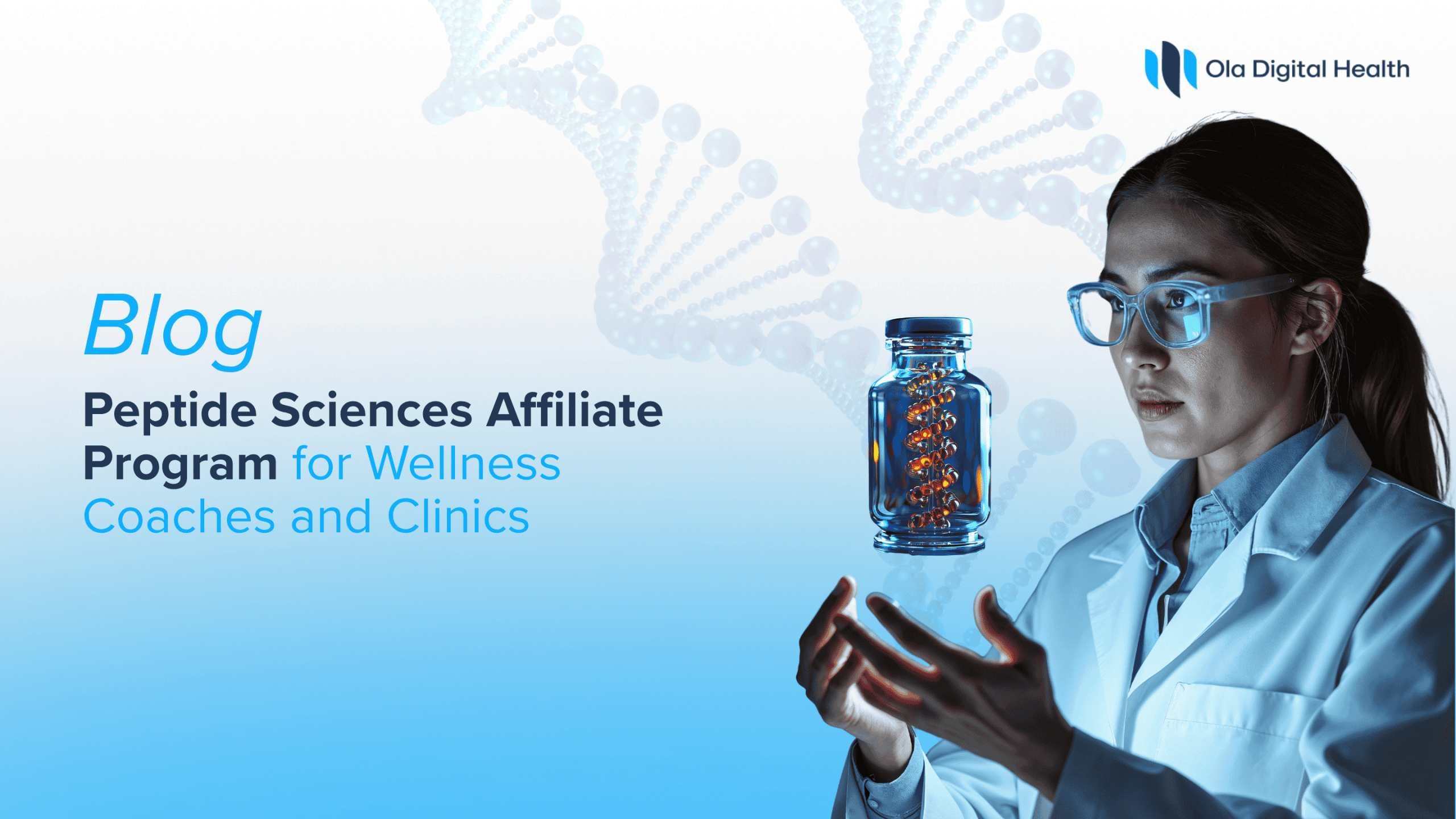
That is where things like the Peptide Sciences Affiliate Program start coming into the picture.
Not as a quick way to earn.
More like an extension of what many coaches and clinics are already doing.
Why affiliate models are showing up in wellness now
There is a shift happening.
People no longer want generic advice. They want direction. They want options. And most importantly, they want clarity.
At the same time, clinics and coaches are trying to build sustainable models. Education alone does not always translate into revenue.
So the question becomes simple.
How do you guide someone and also give them access to what you are talking about?
That is where affiliate models start to make sense.
Not as a sales tool.
But as a bridge.
Understanding the role of a wellness coach today
Before getting into affiliate programs, it helps to pause and ask something basic.
What do health and wellness coaches do?
It is not just about giving plans or routines.
A good coach helps people:
- understand their own patterns
- stay consistent with habits
- make sense of conflicting information
- move from confusion to clarity
An online health and wellness coach is doing the same thing, just in a digital environment. Through calls, content, and structured programs.
So when peptides enter the conversation, the role of the coach does not change.
They are still guiding.
The only difference is the tools available.
Where peptides fit into this ecosystem
Peptides are not being introduced randomly.
They are showing up because people are already asking questions.
Questions around:
- recovery
- energy levels
- metabolic health
- aging
Some of these conversations naturally lead to structured programs.
Others stay at the education level.
What matters is how they are introduced.
Because this is also where concerns come in.
People want to understand things like wellness peptides side effects before they even consider anything else.
That is a good thing.
It means the audience is thinking, not just following.
What the Peptide Sciences Affiliate Program actually represents
At a surface level, it looks simple.
You share. Someone clicks. You earn.
But that is not how it works in practice.
The Peptide Sciences Affiliate Program only works when it is aligned with:
- the content you are already creating
- the audience you have built
- the trust you have established
If any of these are missing, it feels forced.
And when something feels forced in health and wellness, people pull back quickly.
How clinics are approaching affiliate models
Clinics are a little different from individual creators.
They already have structure. They already have patients. They already have responsibility.
So they do not approach affiliate models casually.
Instead, they look at:
- whether it fits into existing care plans
- whether it aligns with patient needs
- whether it can be explained clearly
For some clinics, it becomes part of a broader offering.
For others, it is something they choose not to include at all.
Both approaches are valid.
What makes affiliate integration work
There are a few patterns that show up when this is done well.
It is not complicated.
But it is intentional.
- Education comes before recommendation
- Context is always provided
- Limitations are clearly explained
- Decisions are left to the patient or client
According to the National Institutes of Health, peptide-based therapies are gaining attention due to their targeted nature and lower systemic impact compared to many traditional treatments.
This explains why interest exists.
But interest alone is not enough.
It needs to be handled carefully.
Where most people get it wrong
The problem is rarely the program.
It is the approach.
Some people move too quickly.
They introduce affiliate links before building understanding.
They skip over concerns like wellness peptides side effects.
They assume trust instead of earning it.
That is where things break.
And once trust is affected, it does not come back easily.
The balance between earning and responsibility
This is the part that requires honesty.
Yes, affiliate programs can generate income.
But in wellness, income cannot come before integrity.
People are not just buying products.
They are making decisions about their body.
So the responsibility is higher.
For a coach or clinic, the real question is not:
Can this earn revenue?
It is:
Does this make sense for the person I am guiding?
What sustainable models look like
The people who are doing this well are not chasing quick wins.
They are building slowly.
They:
- answer questions consistently
- revisit topics over time
- stay transparent about outcomes
- keep expectations realistic
An online health and wellness coach who does this builds something stronger than just income.
They build credibility.
And that tends to last longer.
A more grounded way to look at it
It is easy to think of affiliate programs as a trend.
But this is really about how wellness is evolving.
People want access.
They want guidance.
They want options that feel aligned with what they are already learning.
Affiliate models are simply one way to connect those pieces.
Final thought
The Peptide Sciences Affiliate Program is not a shortcut.
It is a tool.
And like any tool, its value depends on how it is used.
For some, it will fit naturally.
For others, it may not.
What matters is not whether you use it.
What matters is how you think about it.
If you are exploring how to integrate structured peptide offerings or affiliate models into your practice without compromising trust, it helps to build the right foundation first.
Schedule a call with our experts at Ola Digital Health to understand how to create scalable, ethical, and patient-centered systems around peptide therapy and wellness services.
FAQs
1.Can clinics integrate affiliate peptide offers into patient wellness plans?
Yes, but only when it aligns with patient needs and is supported by clear education and guidance.
2. Are affiliate peptide programs suitable for functional medicine clinics?
They can be, especially when integrated thoughtfully into personalized care models.
3. What factors affect affiliate earnings in peptide marketing?
Audience trust, clarity of content, and consistency in communication play a major role.
4. Is the Peptide Sciences affiliate program profitable for small practices?
It can be, but results depend on how well it fits into the existing practice and audience.
5. Will affiliate marketing affect client trust in wellness coaching or clinic services?
It can, if not handled carefully. Transparency and education help maintain trust.