
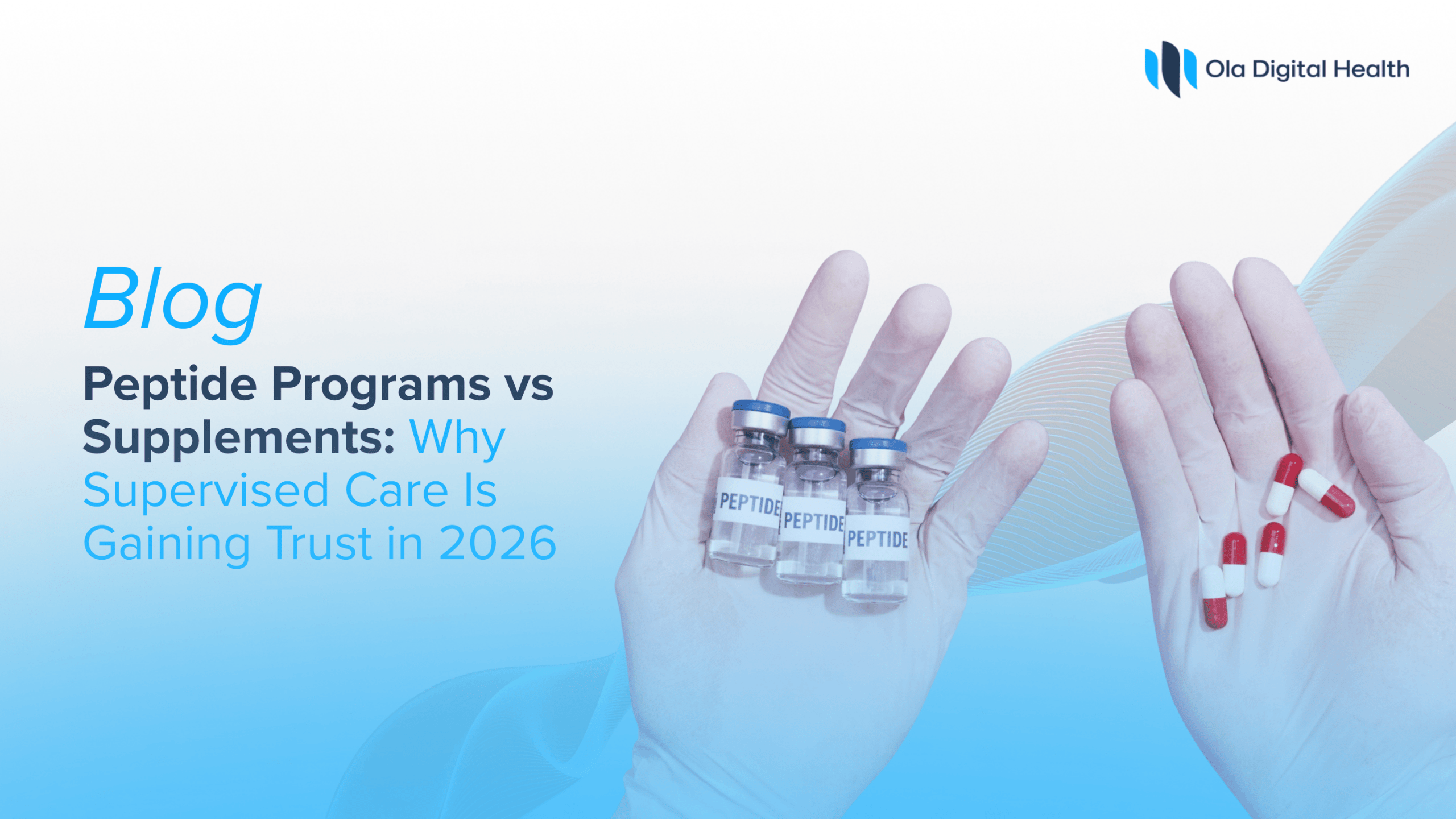
If you go to any health store today, you’ll see shelves full with supplements that promise to give you energy, help you recover, help you lose fat, balance your hormones, and live longer. A lot of people start their road to health there. A bottle, a label, and a few pills per day. It seems easy.
But in the last several years, something interesting has been going on in the realm of wellness. People are asking more difficult questions. People are wondering more than just what medicine to take. They want to know if the method is really working.
This change is one reason why people talk about peptide treatment and supplements so often. People are starting to see the difference between getting something from a store and following an organized program with help from doctors.
People want results they can trust, thus supervised care is getting more focus in 2026.
The health and wellness business is changing.
The wellness market was ruled by supplements for a long time. It was a simple idea. There is definitely a bottle for anything that can help you get better health.
The problem is that a lot of folks took a lot of different supplements and didn’t observe any real effect. Some people got better. Some people didn’t feel any difference at all.
This has sparked a new debate over peptides and supplements that you can buy without a prescription.
There is no guesswork in peptide programming. They focus on established protocols that include screening, medical evaluation, and monitoring. Patients don’t just hope that a supplement will work; they work with professionals who know how the body reacts to different treatments.
The National Institutes of Health says that peptide-based drugs are being looked into in many different areas of medicine because they can affect extremely specific biological circuits. This level of accuracy is one of the reasons why peptide therapy is becoming more popular.
What Sets Peptide Programs Apart
To get a better idea of the change happening in wellness, it’s helpful to know how peptide programs work.
This is what a supplement strategy normally looks like:
- Buy something in a store or online
- Do what the label says
- Wait and see if anything changes
A structured peptide program looks extremely different.
Patients usually go through a number of steps:
- Review of medical intake and health history
- Talk to a licensed doctor
- Testing in the lab when necessary
- Making a treatment plan just for you
- Keeping an eye on things and making changes
This is what makes supervised peptide treatment what it is.
Patients don’t try things on their own; instead, they work with specialists who keep track of their development and make changes based on real facts.
Why People Are Doubting Supplements
Supplements aren’t always terrible. A lot of vitamins and minerals are good for your health. But there are also problems with the supplement business that patients are starting to recognize.
Some typical worries are:
- Not enough personalization
- Quality is not the same for all products
- Limited clinical supervision
- Unclear instructions on how much to take
The distinction between peptide supplements and therapy typically becomes evident when consumers compare the two.
Peptide therapy programs include direct help from doctors. Self-experimentation is a big part of supplements.
That one difference is enough to influence how many people think about their health.
The Importance of Medical Supervision
People trust peptide programs a lot because they have professional oversight.
Patients are not alone in their treatment when they have physician monitoring during peptide therapy. Providers look at their health history, keep track of their progress, and make judgements based on facts.
There are a lot of benefits to this oversight:
- Better monitoring of safety
- Plans for treatment that are unique to you
- Changes depends on how things go
- Combining with other treatments
Patients frequently express that the most significant difference is the sense of support during the process.
Wellness is less about trying things out and more about getting help from others.
Why Care with Supervision Builds Trust
Trust is becoming one of the most vital things for staying healthy these days. Patients today know more than ever before. They study studies, look at their possibilities, and ask questions.
People that are looking into peptide therapy vs. supplements usually wish to know:
- Who is in charge of the treatment
- How progress will be tracked
- What protections are in place
This is when physician monitoring for peptide treatment becomes very important.
It feels more real when you know a doctor is involved. It changes the experience from wellness for consumers to formal healthcare support.
More than ever, personalization is important.
Personalization is another big distinction between supplements and peptide programs.
Most supplements are made for a wide range of people. They think that everyone who uses the product has the same needs.
Different peptide regimens work in different ways.
Providers create regimens for supervised peptide treatment depending on things like:
- current health indicators
- patterns of living
- goals for therapy
- previous treatments
This individualized strategy is a primary factor for individuals who evaluate peptide supplements against therapy and opt to investigate clinical programs.
The Telehealth Effect
Telehealth has also been a big part of the growth of peptide programs.
In the past, you had to go to a clinic in person to get specialized wellness treatments. A lot of programs today use virtual consultations to work.
Patients may fill out intake forms, talk to doctors, and follow treatment plans no matter where they are.
Telehealth has made it easier for more people throughout the country to get supervised peptide treatment, which is a type of structured care.
A Growing Need for Responsibility
Another reason why supervised care is getting more attention is because it makes people responsible.
It might be hard to tell if anything is working when you take supplements.
Providers can see results more clearly with structured programs. Patients get treatment and follow-up visits that help them see how they are doing.
One reason the debate over peptide therapy vs. supplements keeps going is because of this responsibility.
Patients want to know what’s going on. They want to know if a treatment is making a real difference.
Why more clinics are adding peptide programs
Clinics and wellness professionals are also listening to what patients want.
According to the National Institutes of Health, peptide-based therapeutics are gaining attention in modern medicine because they can target specific biological processes with high precision.
Patients are asking about peptide therapies more and more because they desire treatments that seem structured and medically sound.
Providers who offer supervised peptide treatment might create programs that combine clinical evaluation with assistance for health and fitness.
These programs let clinics:
- offer personalized care plans
- keep a careful eye on how the patient is doing
- Combine therapy with bigger plans for health
Peptide programs have become a key aspect of current wellness treatment for many doctors.
Reasons Why Patients Look into Peptide Programs
Patients typically seek peptide treatment for several reasons. Some people want help with their recovery. Some people want support with their hormone balance or metabolic health.
They have often already taken vitamins and not gotten the results they wanted.
Patients typically start talking about peptides vs. over-the-counter vitamins when they wonder if there is a more organised way to do things.
Providers can answer those questions in a responsible way through peptide treatment programs.
The Big Change in Wellness
The increased interest in peptide programs is a sign of a bigger change in healthcare.
Patients are no longer looking for answers that work for everyone. They want methods that are tailored to them, watched after, and backed up by professionals.
This doesn’t mean that supplements will go away. They are still a part of many health practices.
But the difference between peptide supplements and therapy shows that expectations have changed in a bigger way.
People desire help. They want someone to keep an eye on them. And they want to be sure that the care they get is good.
What the Future of Health Care Will Be Like
In the next few years, it looks like supervised wellness models will keep growing.
Patients are putting more and more value on programs that include:
- consultation with a doctor
- planning treatment that is right for you
- constant checking
- open communication
Supervised peptide treatment is all about these things.
As wellness and digital health continue to change, more providers are creating programs that use current technology and medical supervision.
Conclusion
The debate about peptide treatment and supplements is part of a wider change in how people think about health. Many patients now prefer structured care that involves professional direction instead of guessing which product might help.
Peptide therapy medical supervision programs offer evaluation, monitoring, and personalized support that supplements alone can’t give.
As more people learn about it, it gets easier to tell the difference between peptides and over-the-counter pills. One way is to try things out on your own. The other one is about overseeing clinical care and organizing care.
That difference is why supervised peptide programs are becoming more popular in modern wellness.
If you’re looking for how to make structured peptide programs with the right supervision, compliance, and telemedicine delivery, schedule a call with our specialists to find out how platforms like Ola Digital Health help with modern wellness care.
Frequently Asked Questions
1. How can clinics launch peptide therapy programs using Ola Digital Health?
Ola Digital Health helps clinics manage structured peptide programs through telehealth workflows, patient intake, and treatment monitoring. This makes supervised care easier to organize and scale.
2. What is the main difference between peptide programs and supplements?
Supplements are usually self-directed and based on general instructions. Peptide programs are structured treatments designed and monitored by healthcare professionals.
3. Can telehealth platforms like Ola Digital Health support remote peptide care?
Yes. Ola Digital Health allows providers to conduct virtual consultations, manage patient intake, and track treatment progress remotely.
4. Who usually considers peptide therapy instead of supplements?
Many people explore peptide therapy after trying multiple supplements without clear results. They often prefer structured care with medical guidance and monitoring.
5. Why do clinics use platforms like Ola Digital Health for peptide programs?
Digital health platforms help clinics organize consultations, patient data, and follow-ups in one place. This improves efficiency while supporting supervised peptide treatment programs.