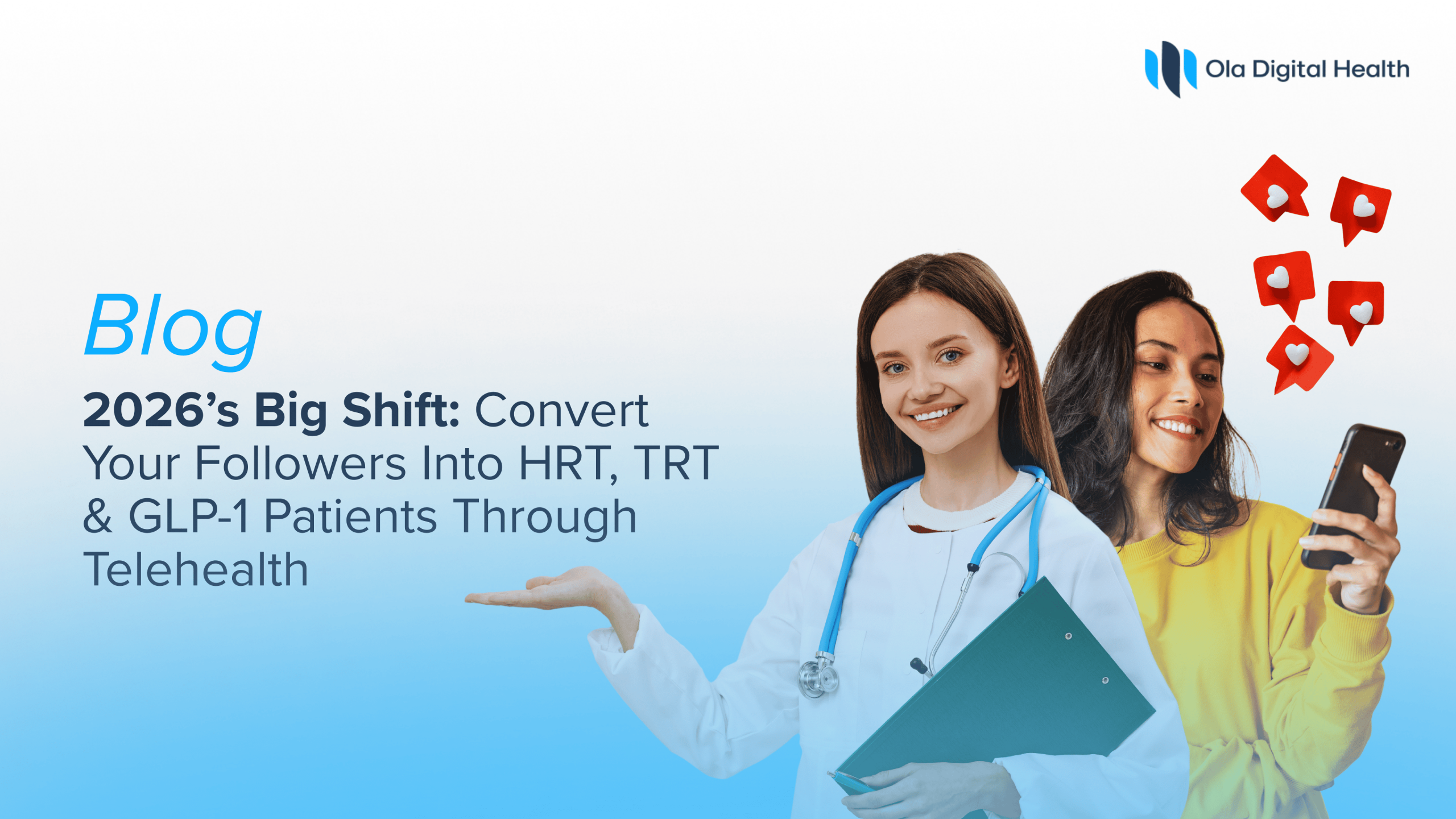
In 2026, the biggest shift in healthcare is not a new drug, a new app, or a new platform.
It is trust.
People no longer discover healthcare through ads or hospital websites. They discover it through people. Creators they follow daily. Voices they already believe. Stories that sound like their own lives.
This is where healthcare, telehealth, and the creator economy finally converge in a way that makes sense.
Not for hype.
Not for shortcuts.
But for real, scalable care.
For healthcare founders, clinic owners, and digital health operators, this shift opens a powerful opportunity. Convert creator trust into compliant, long term patient relationships using telehealth infrastructure that is built to scale.
This is where creator monetization 2026 stops being transactional and starts becoming transformational.
Why the Creator Economy Is Now a Healthcare Growth Channel
Creators already do what most healthcare brands struggle with.
They educate without lecturing.
They normalize without clinical coldness.
They speak in human language.
When a creator talks about unexplained weight gain, burnout, hormonal imbalance, or low energy, their audience does not scroll past. They lean in.
The comments tell the real story.
I feel the same.
I thought it was just me.
Where do I go for help.
This is not influence. This is pre intent.
Healthcare brands that understand this are no longer asking how to advertise through creators. They are asking how to build influencer health programs that turn this trust into real care journeys.
Telehealth Is the Missing Infrastructure Behind Creator Led Care
Creators cannot diagnose.
Creators cannot prescribe.
Creators should not give medical advice.
And they do not need to.
Telehealth exists to take the conversation forward safely, legally, and ethically.
Telehealth for creators works when creators stay in their lane and platforms handle everything else.
Medical intake
Licensed providers
Lab work
Prescriptions
Follow ups
Compliance
This separation is not a limitation. It is what makes the model sustainable.
For healthcare brands, this means creators become the top of the funnel, while telehealth becomes the engine that converts interest into patients.
GLP 1 and the New Weight Loss Conversation
GLP 1 medications are not trending because of aesthetics. They are trending because people are exhausted.
Exhausted by dieting.
Exhausted by guessing.
Exhausted by being told to try harder.
Creators talking honestly about metabolic health have changed the tone of the conversation. Weight loss is no longer framed as discipline alone. It is framed as biology, hormones, insulin resistance, and long-term care.
A GLP 1 Weight Loss program delivered through telehealth allows healthcare brands to meet this demand responsibly.
Instead of audiences experimenting on their own, they are guided into structured, doctor supervised programs.
According to the Centers for Disease Control and Prevention, obesity is a complex chronic disease influenced by behavior, environment, genetics, and metabolism. This is exactly why medication supported care must be paired with medical oversight.
Creators open the door. Telehealth ensures what happens next is safe.
Hormones Are Becoming a Mainstream Health Conversation
Five years ago, hormone therapy felt niche and intimidating.
In 2026, it feels overdue.
Creators are openly discussing symptoms that were once dismissed or misunderstood.
Low energy
Poor sleep
Mood instability
Brain fog
Low libido
Unexplained weight changes
These conversations naturally lead to curiosity around hormone optimization.
HRT & TRT programs for influencers do not position creators as experts. They position creators as proof that help exists.
Best online hormone replacement therapy programs delivered through telehealth allow healthcare brands to offer real solutions without geographic limitations.
Patients can access licensed providers, testing, and follow up care without waiting months or navigating complex clinic systems.
Why This Model Works Better Than Traditional Marketing
Healthcare advertising is expensive and increasingly ineffective.
Creator led acquisition works because it starts with empathy, not persuasion.
Audiences do not feel sold to. They feel seen.
For healthcare brands, this results in higher quality patients who already understand the problem and are motivated to seek care.
For creators, this becomes the most aligned form of creator monetization 2026.
They are not pushing products.
They are sharing pathways.
This builds long term trust instead of one time clicks.
Compliance Is Not a Risk When the System Is Built Right
One of the biggest concerns around influencer health programs is compliance.
The reality is simple.
When creators educate and platforms handle care, compliance becomes a strength.
Clear boundaries
Educational messaging
Doctor led treatment
HIPAA compliant systems
Telehealth platforms that are built for healthcare brands ensure that every patient journey is documented, regulated, and protected.
This allows creators to remain authentic while healthcare operators remain compliant.
What Successful Influencer Health Programs Look Like in 2026
The programs that scale share common traits.
They focus on education before conversion.
They use soft calls to action, not pressure tactics.
They integrate mobile first telehealth onboarding.
They prioritize long term care, not one time prescriptions.
Creators talk about experiences.
Healthcare brands deliver outcomes.
This division of roles is what makes telehealth for creators work at scale.
Where Ola Digital Health Fits Into This Shift
Ola Digital Health is built for this exact moment in healthcare.
Not as a clinic.
Not as a content agency.
But as the infrastructure behind modern virtual care businesses.
Ola enables healthcare brands, founders, and operators to launch white label telehealth programs that support weight loss, hormone therapy, and ongoing care.
This allows brands to own their patients, their data, and their growth.
Creators bring trust.
Ola provides the system.
From GLP 1 Weight Loss program launches to scalable HRT & TRT programs for influencers, Ola supports the operational side of influencer led healthcare growth.
This is not about chasing trends. It is about building durable healthcare businesses.
The Long Term Impact Most Brands Are Missing
This shift does more than drive revenue.
It expands access.
It reduces stigma.
It brings care to people who avoided it before.
When someone books a telehealth appointment because a creator made it feel normal, healthcare has already done its job.
This is how influencer health programs move from marketing tactics to care models.
Final Thoughts
2026 belongs to healthcare brands that understand one thing clearly.
Trust comes before technology.
Technology sustains trust.
Creators are not replacing doctors. They are guiding people toward them.
Telehealth is not replacing clinics. It is extending them.
If you are building for the future of healthcare, this is the moment to align creator trust with compliant, scalable virtual care.
If you want to explore how to launch or scale influencer health programs, build telehealth for creators, and create sustainable creator monetization 2026 models Schedule a call with our experts to explore how Ola Digital Health can help you turn influence into impact through GLP 1 Weight Loss programs and Best online hormone replacement therapy solutions built for long term care.